Power of Regret – Daniel Pink
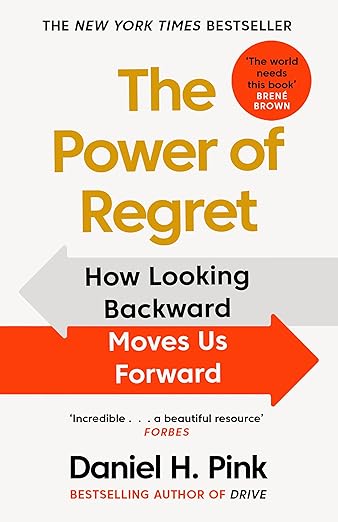
It has been a while since I picked up a book. Daniel Pink showed up on my TikTok For You page and talked about his book, Power of Regret. I cannot remember what he said, but it must have hit some nerve in me. I immediately went on the library app (on my mobile phone) and saw that the ebook is available to borrow. I finished it in 4 days, reading instead of watching TikTok on the train to work and also before bed (bad habits, I know).
I like how Daniel frames the definition of regret. Regret is created by a comparison between the actual outcome and the outcome of a different decision. It’s the feeling of unpleasure associated with a thought of the past, together with the identification of an object of blame and an inclination to behave a certain way in the future.
In simple words, regret is looking back at an opportunity we did not take and telling ourselves things would have been better had we done things differently.
It is only Human
In the whole book, I find Daniel’s description on how regrets are created very insightful. I read that section a few times to grasp and reflect on it, coming to a eureka moment. The process of regret begins with two abilities that are seemingly only possible in humans. Regrets only happen in humans because we can visit the past and the future in our heads, and we can tell the story of something that never happened. Discontent with the present, we mentally return to the past. Then we negate what really happened and substitute it with an alternative decision. Then we hop back to the present, with the reconfigured past. The present that is encountered when we arrive is vastly different from the one we left moments earlier. In this newly modeled world, we feel satisfied, fulfilled and accomplished.
In short, regret is a combination of time travel and creating a fable in the human mind.
What does it say about ourselves
Daniel puts our regrets into a few categories. He also had a table in the book to show how different types of regret can tell us what we treasure personally. Through the book, Daniel gave examples of regret, based on the responses from people who participated in his World Regret Survey.
| What it sounds like | The human needs it reveals | |
| Foundation Regret | If only I’d done the work | Stability |
| Boldness Regret | If only I’d taken the risk | Growth |
| Moral Regret | If only I’d done the right thing | Goodness |
| Connection Regret | If only I’d reached out | Love |
Learn more about the 4 types of regret from his TED Talk.
How to Handle Regrets
In the book, there are 2 types of regret that we experience. First is the Closed Regret, for example when the person you regret not reaching out to has passed away, or the opportunity to make a difference has long passed. The way to move forward is to learn from the regret and not repeat the same mistake. The second type of regret is the Open Regret. This is when we still have the opportunity to make amends, reaching out to a long-lost friend or calling an elderly parent. It is still not too late to reverse an open regret.
For more details, Daniel had a few chapters at the end of the book on how to systematically handle regrets.
Firstly, Undo: If it is possible, make amends and apologize if you have harmed others. If you have harmed yourself, then fix the mistake, such as paying off debt. If that fails, then Daniel recommends the “at least” method. This is where we try to find a silver lining in the decision that we made leading to the regret. He said in the book to ask the following questions: How could the decision I now regret have turned out worse? What is the silver lining of this regret? How would I complete the following sentence: “At least…”?
Disclosure, Compassion, Distance
I would say this is the more technical chapter in the book to help overcome regrets and make use of it for future benefits.
To overcome regret, the book recommends disclosure. This is when you write down or talk to people about the regret. Like most therapies, this is the first step to recovery. He did say that you could just write it down in a journal and try it for a few days.
Then apply self-compassion to the regret through a method of “normalize and neutralize”. This is how self-compassion works.
- If a friend comes to you with the same regret as yours, would you treat the person with kindness? If yes, then use that approach on yourself. If you feel contempt, try a different answer (i.e., please treat with kindness).
- Is this type of regret something that other people might have endured, or are you the only person to have experienced it? If you believe your stumble is part of our common humanity, reflect on that belief, as it’s almost always true.
- Does this regret represent an unpleasant moment in your life, or does it define your life? If you believe it’s worth being aware of the regret but not overidentifying with it, you are on your way. If you believe this regret constitutes who you are, ask someone what they think.
Self-distancing
The book also recommends talking about regrets and reflecting on them in the third person. This will help you distance your current self from the regret and see just the facts.
- Talk in the third person. Imagine your best friend is confronting the same regret that you are dealing with. What lesson does that regret teach them? What would you tell them to do next? Follow your own advice.
- Imagine that you are a neutral expert, a doctor of regret science. Analyze your regret in a pristine examination room. What is your diagnosis? What is your prescription? Write a note to yourself using “you” to outline the small steps to learn from the mistake.
- Ask yourself: if I were replaced tomorrow, what would my successor do?
- Imagine 10 years from now, looking back at this regret. How would you respond to it? What did you do?
There is a Video
I have to admit, I regret not googling for videos before jumping straight to borrowing the ebook. As I was writing the summary in this blog, I had to google to get links, and that’s when I found a video. So if you cannot get the book, just watch the video. It would give you the gist of the book a lot faster, but it may lack the details found in the book.
The library
I would also take this opportunity to say that I’ve not appreciated libraries much till I came here. This came as a shock for someone who was the head librarian back in secondary school. The libraries in Ireland are like a giant bookshop, where you get free books. Their book titles are also up to date; we get new books in the library all the time.
We are members of the Blanchardstown Library, part of Fingal Libraries. For children’s books, we pop in the library and grab a few books. For more popular adult books, we reserve the book from the web portal. Once the book is available, they will send us an email to collect it from the library. The great thing about the system is that we are able to borrow books regardless of which library the book is located in. We see books get shipped from Limerick and Galway. Membership is free!
I read this book from their ebook application, which is also free as a member of the library. They even have audio books as part of the ebook application.
The only downside of the application and library is that we need to wait for books to become available. We can reserve the book online, but we still have to wait. Some great books could have up to 6 months of wait time.