The Limerick Cathedral Nobody Told Me About
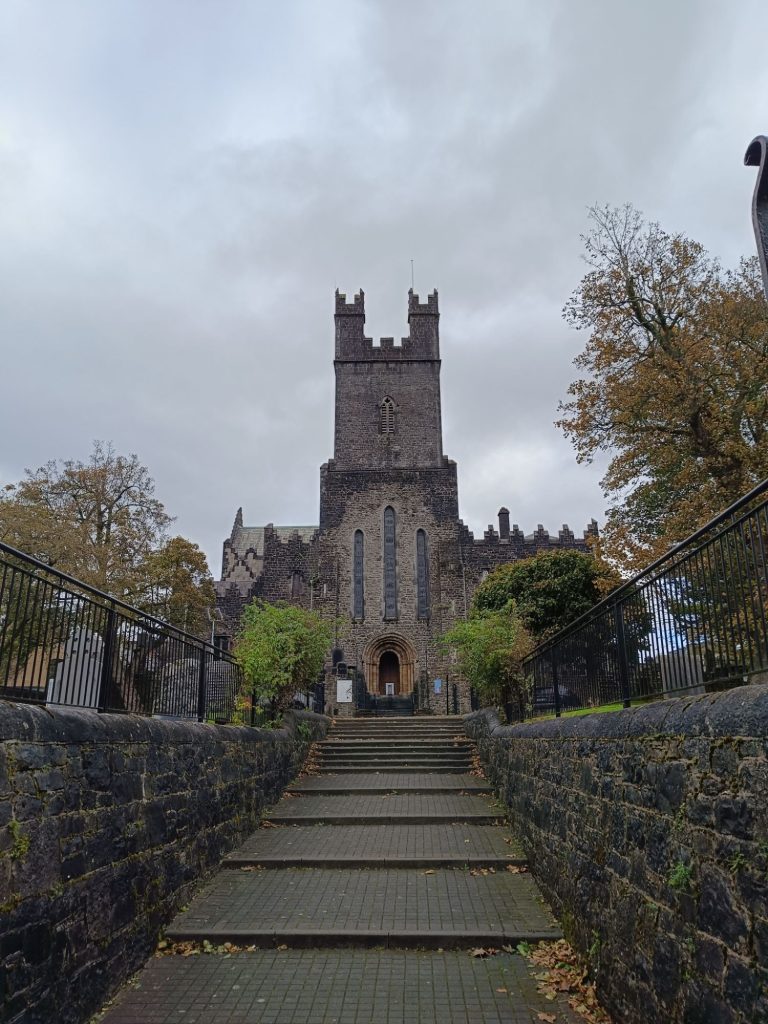
Why isn’t this one of the must-visit places in Ireland?
I only found out about St Mary’s Cathedral because of a pint, or a few. The day before we drove west, a historian friend and I got talking, and he asked whether I’d been to St Mary’s in Limerick. I hadn’t. I’d barely heard of it. He looked at me the way historians do when you’ve missed something obvious, and told me to go.
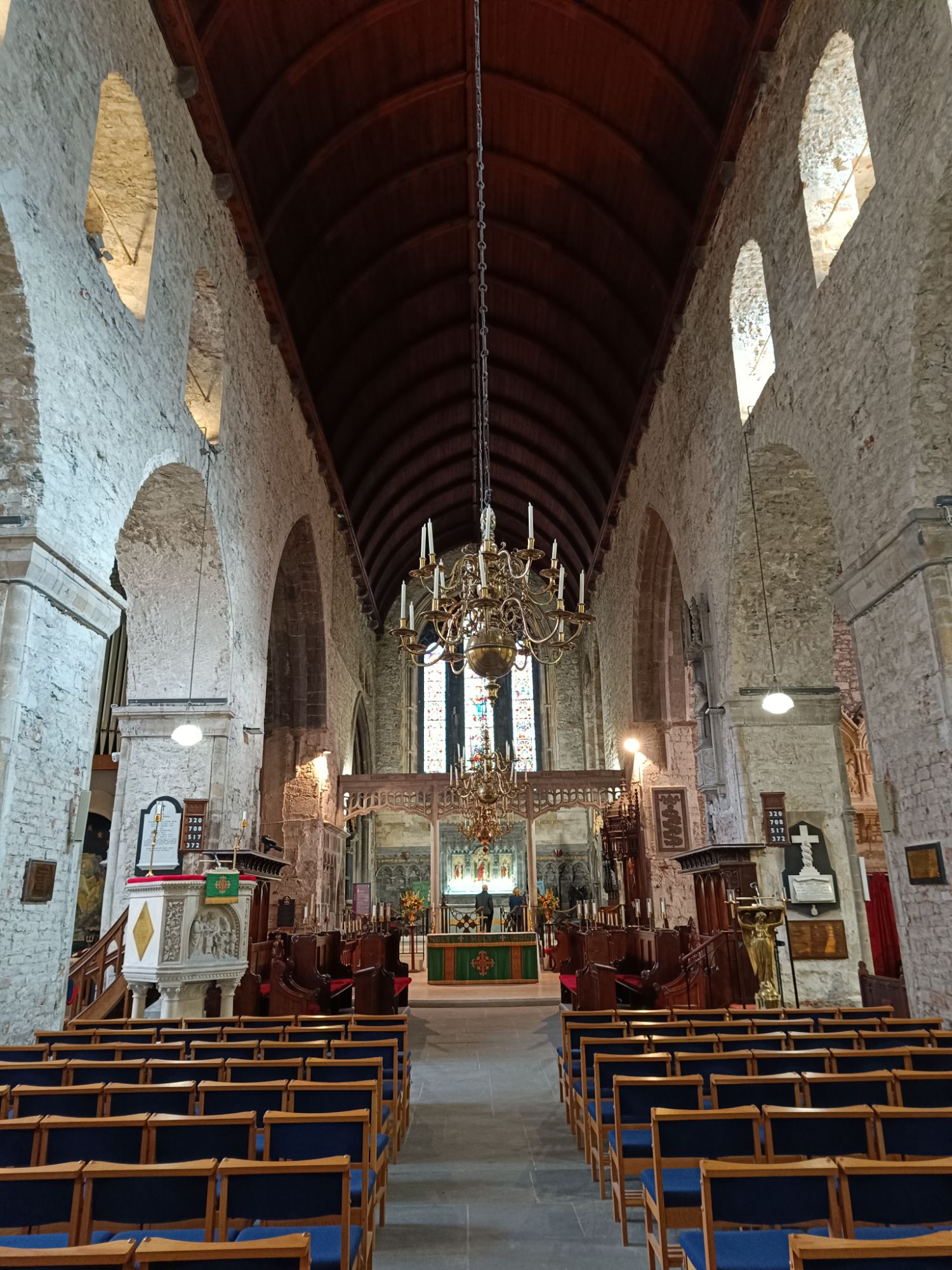
I’m glad I did. This is the oldest building in Limerick still in continuous daily use. It was founded in 1168, almost nine centuries ago, by a king.
A hill with a long memory
The cathedral sits on King’s Island, the oldest part of Limerick, in the loop of the Shannon where the city began. Before the cathedral there was a palace, and before the palace the hill was a Viking meeting place, a thingmote, where Norse settlers gathered to make decisions and settle disputes. The Vikings built Limerick, and the Irish kings fought them for it. Brian Boru‘s dynasty eventually took the city, which is how this hill ended up in O’Brien hands.
So you’re standing on ground that has been a seat of power for well over a thousand years.
The King Who Gave Away His Palace
The man behind the cathedral is Domnall Mór Ua Briain, anglicised as Donal Mór O’Brien. He was a descendant of Brian Boru, the High King who broke the Vikings’ grip on Ireland, and the Annals of Ulster call him the last King of Munster. By his time the O’Briens’ world was shrinking, with rival kings pressing in and the Normans about to land. Around 1168 he gave his royal palace on King’s Island to the Church, and a cathedral rose on the site.
You can read that as piety or as politics. He was building churches all over his kingdom, including at Cashel, at Killaloe and at Holy Cross Abbey in Tipperary, and every one of them put the O’Briens’ stamp on the landscape in stone. What’s remarkable is how much of it survives. He died in 1194 and was buried in the cathedral he founded.
The door that may have been a palace entrance
When you reach the Great West Door, slow down. It’s carved in the Romanesque style, and tradition holds that it was once the main entrance to Donal Mór’s royal palace. Experts believe parts of the palace may be incorporated into the cathedral itself. If so, this is a royal doorway that people have been walking through for roughly nine hundred years.
Look closely at the stonework around it for small notches and grooves. Local tradition says they were made by defenders sharpening swords and arrows during the sieges of Limerick. (The cathedral’s own visitor guide attributes some of the marks to Cromwell‘s soldiers in the 1650s instead. Whoever made them, someone was whetting a blade on the walls of a king’s palace, and the marks are still there.)
The altar that came home
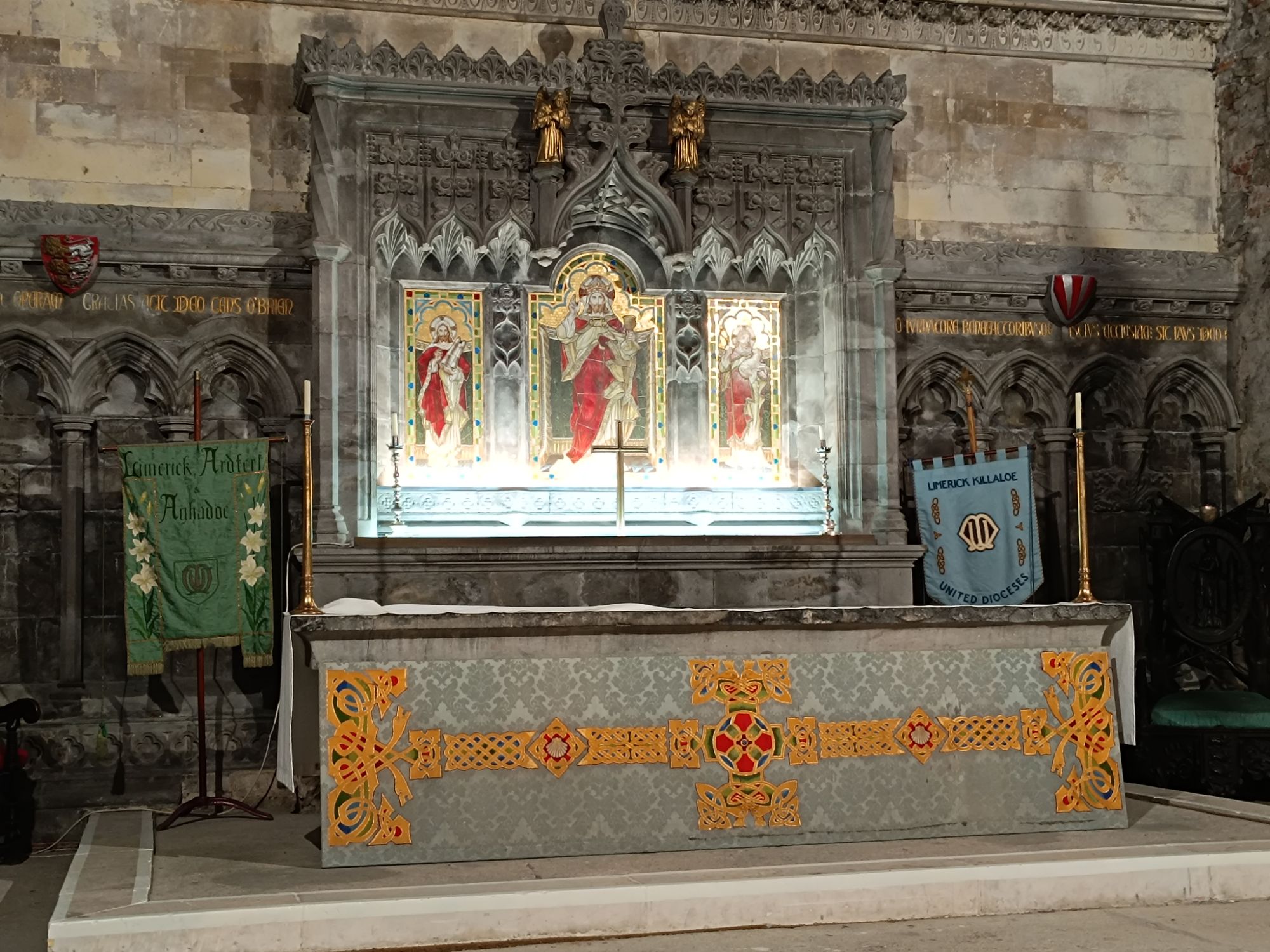
When Cromwell’s army took Limerick in 1651 and turned the cathedral into a stable, the soldiers didn’t stop at the livestock. They tore out the original high altar, a pre-Reformation slab of limestone about four metres long, carved from a single block. It was dumped, and for roughly three hundred years it was gone.
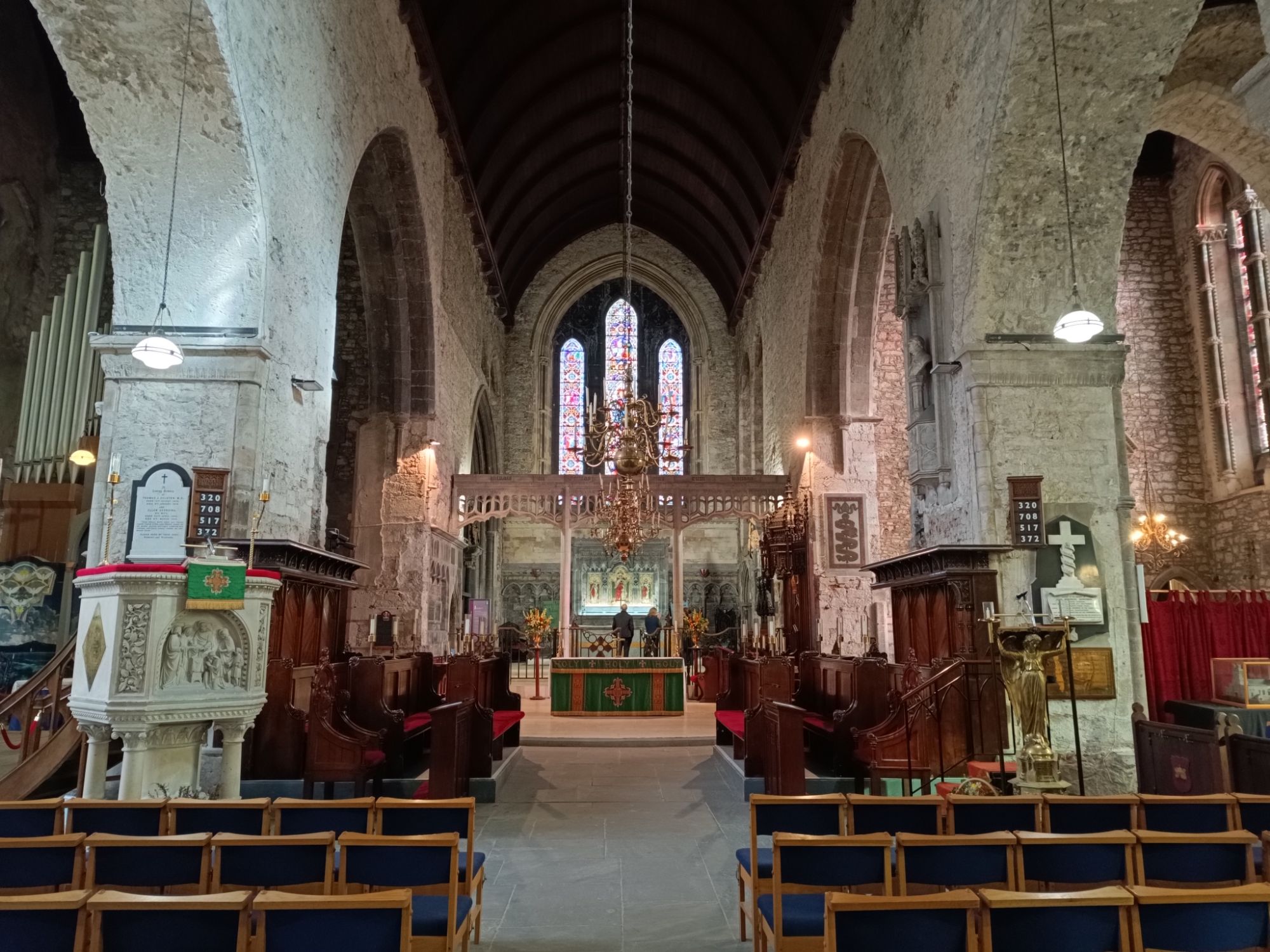
Then, in the 1960s, it was recovered and put back. It now stands in the Lady Chapel, where it’s still used for communion at the major festivals. It’s reputed to be the largest altar of its kind in Ireland and Britain. Standing in front of it, you’re looking at the same stone that stood in the cathedral when the O’Briens were still kings.
Survivor
Limerick has been besieged more often than almost any Irish city, and the cathedral has been through all of it.
- 1651: After Cromwell’s forces took Limerick, the parliamentary army used the cathedral as a stable. Henry Ireton, Cromwell’s son-in-law, commanded the siege, and pinnacles from his house now sit in the churchyard doing duty as bollards.
- 1691: During the Williamite siege, cannon fire damaged the east end badly. After the Treaty of Limerick, King William granted £1,000 towards repairs. You can still see cannonballs from the siege inside the cathedral.
The O’Briens are still in the room
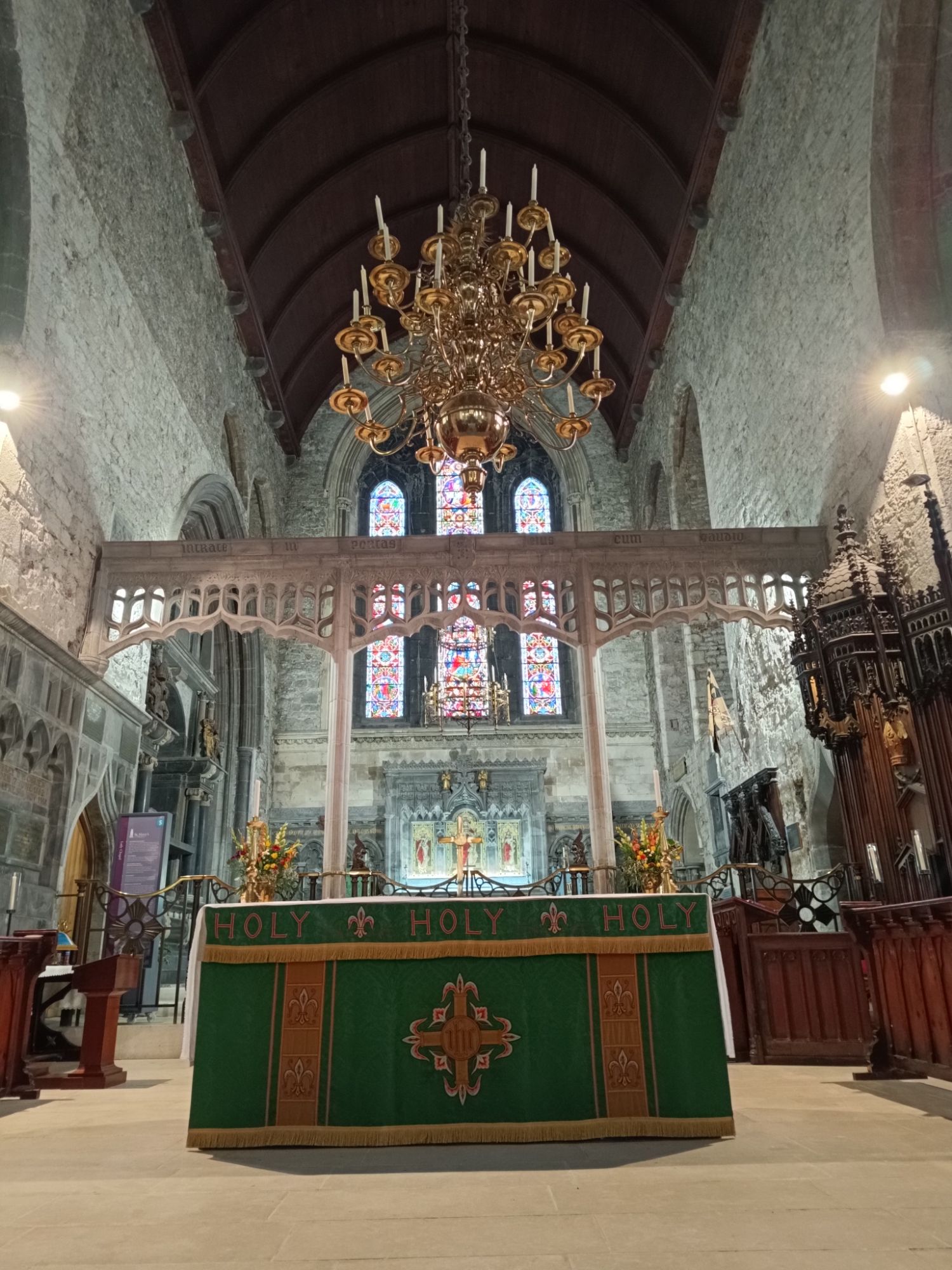
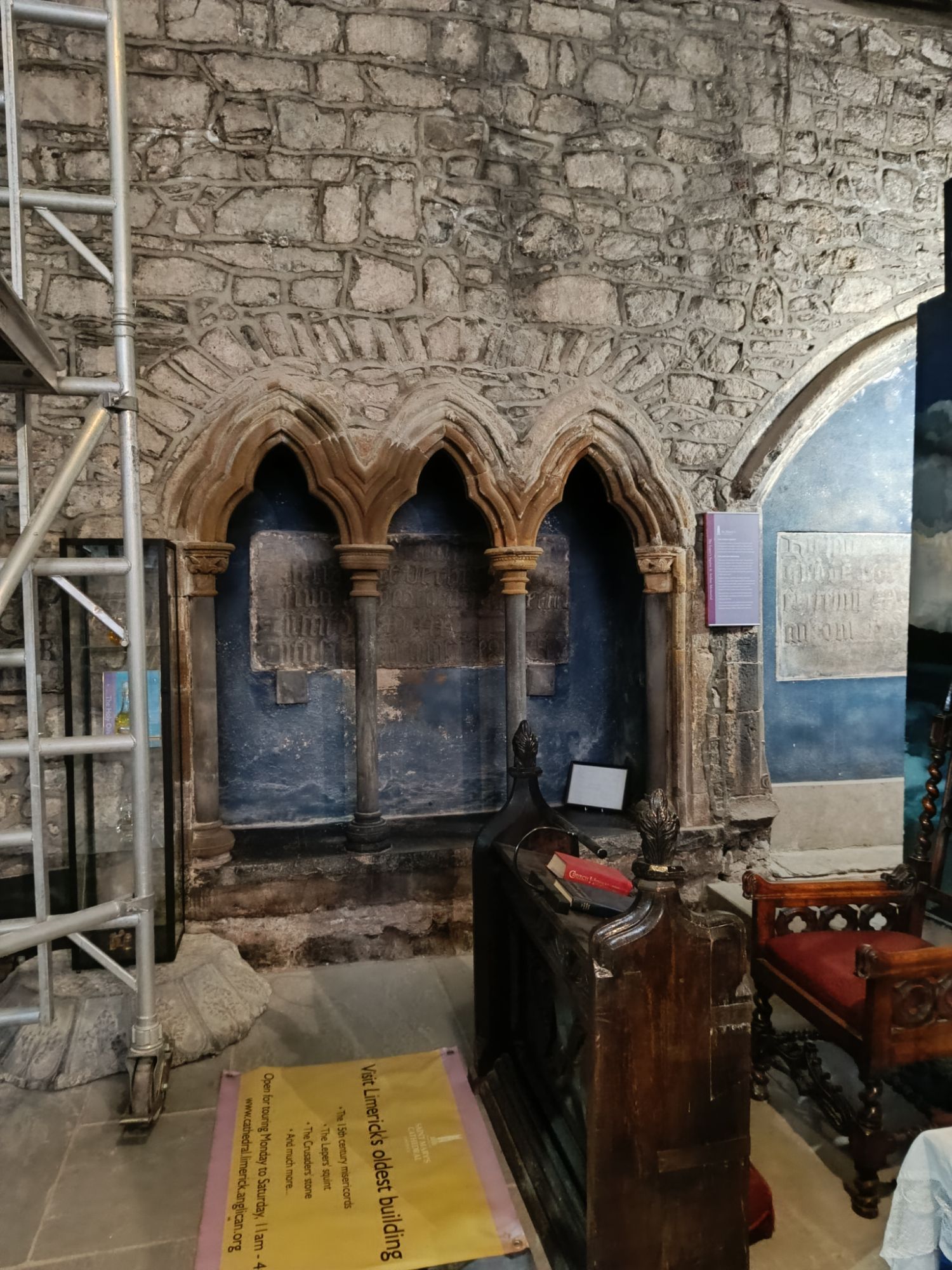
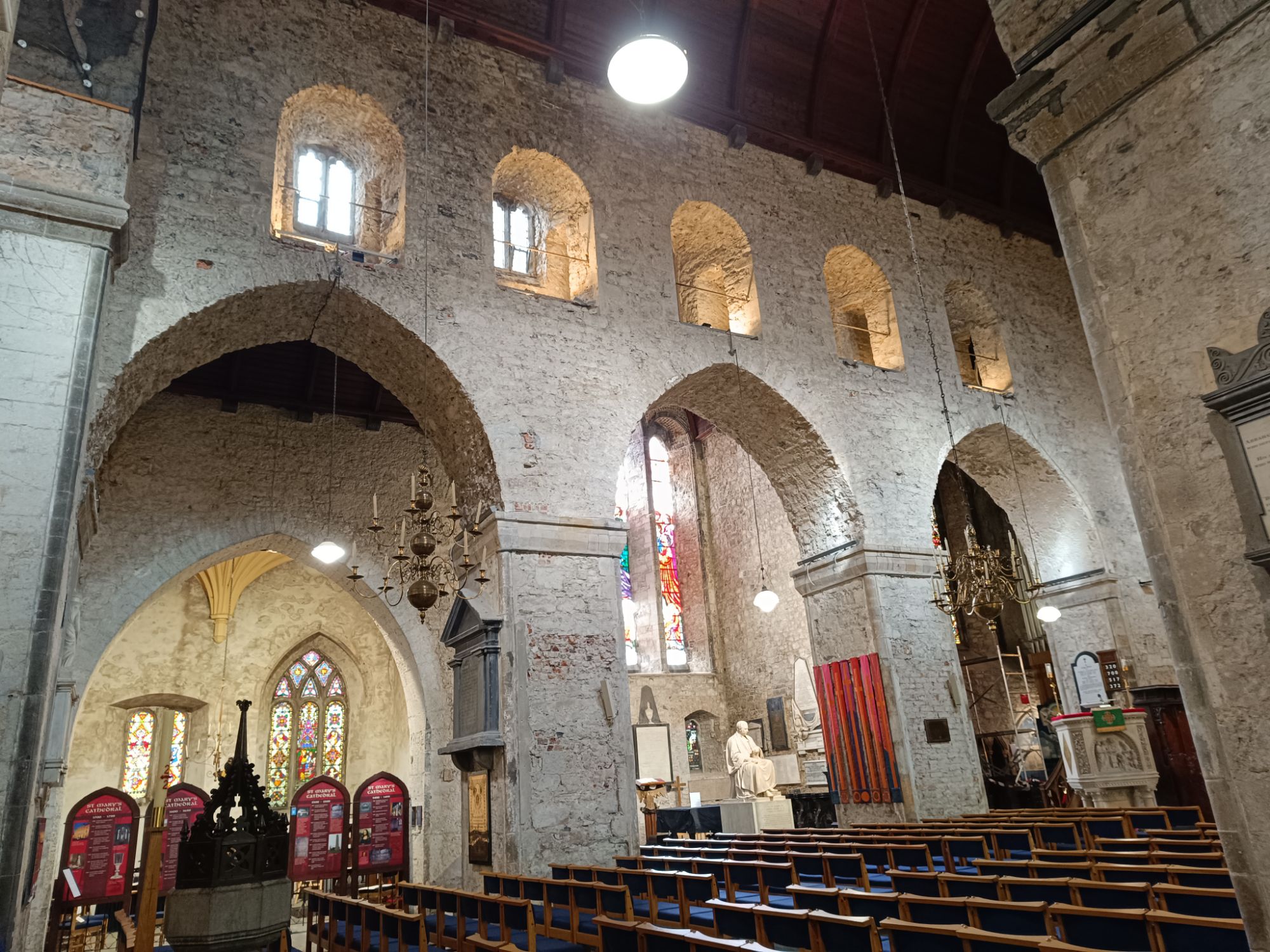
For me, this was the heart of the visit. Inside the cathedral the O’Briens are everywhere. The great monument to Donogh O’Brien, 4th Earl of Thomond, dominates the chancel. Beneath it, set into the base, is the coffin lid of Donal Mór himself, the founder, who died in 1194.
The monument holds a whole story in one place. In 1543, Murrough O’Brien, the last King of Thomond, submitted to the English Crown and took the title Earl of Thomond. Four and a half centuries of Gaelic kingship became a peerage, and the founder’s tomb ended up underneath an earl’s memorial.
Don’t miss the misericords either, the carved wooden clergy seats. They’re medieval and made of oak, and this is the only complete set left in Ireland. The name comes from the Latin for “mercy”: the hinged seat tipped up to leave a little ledge, so a clergyman could look as though he were standing through a long service while he rested. Lift each seat and the carving underneath is different.
So why isn’t it on the list?
I’ve been turning this over. Limerick doesn’t have the best reputation among travellers, and it sits between the big draws of the Cliffs of Moher and Cashel, so people drive past it. St Mary’s is also a working Church of Ireland cathedral rather than a ruin, so it doesn’t get the postcard treatment. And it rewards people who read as well as look: the drama is in the history, and you only see it if someone tells you.
That’s my case for telling you. If you’re driving west, stop. It’s a short walk from King John’s Castle, and it’s one of the few places in Ireland where you can stand in a medieval cathedral, a royal doorway and a dynasty’s burial place all at once.
Before you go
Two practical things. First, there’s an entrance fee for sightseeing. At the time of writing it’s €5 for adults and €3.50 for students with ID, and children aged 10 and under go free. Second, the cathedral is closed to visitors on Sundays, because it’s a working church and Sunday belongs to worship. You’re welcome to come to a service, and there’s no charge for that. Otherwise, plan your visit for Monday to Saturday.
Prices and opening hours can change, so check the cathedral’s website for the latest before you go.