London – RAF Museum
We visited the RAF Museum London on our last trip too. It’s a massive place. Last time we just wandered through without a real plan. This time we wanted to focus on the WWII exhibition that is made up of 3 hangars. The kids also had unfinished business, souvenirs they’d spotted before but walked away from. I’d missed a few exhibits myself the last time we visited.
The RAF museum is half and hour away from London city center. This is out of the usual tourist travel area. That means the museum is not packed and full of people. We did see a few school groups but that’s manageable. The museum is also free, a donation is appreciated. All the impressive display for free and we can spend a whole day.
Avro Lancaster Bomber
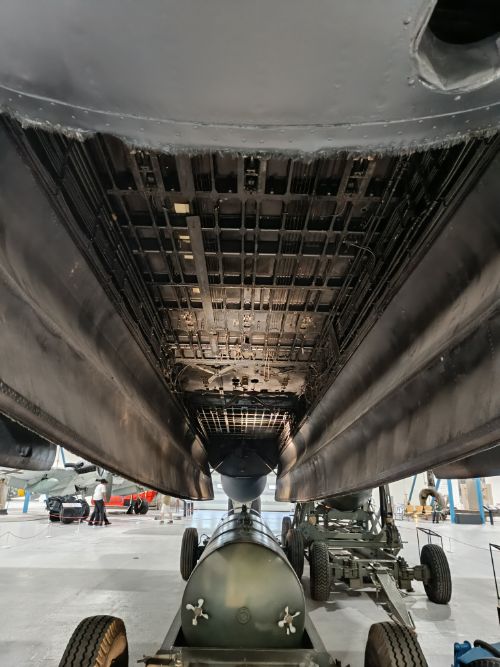
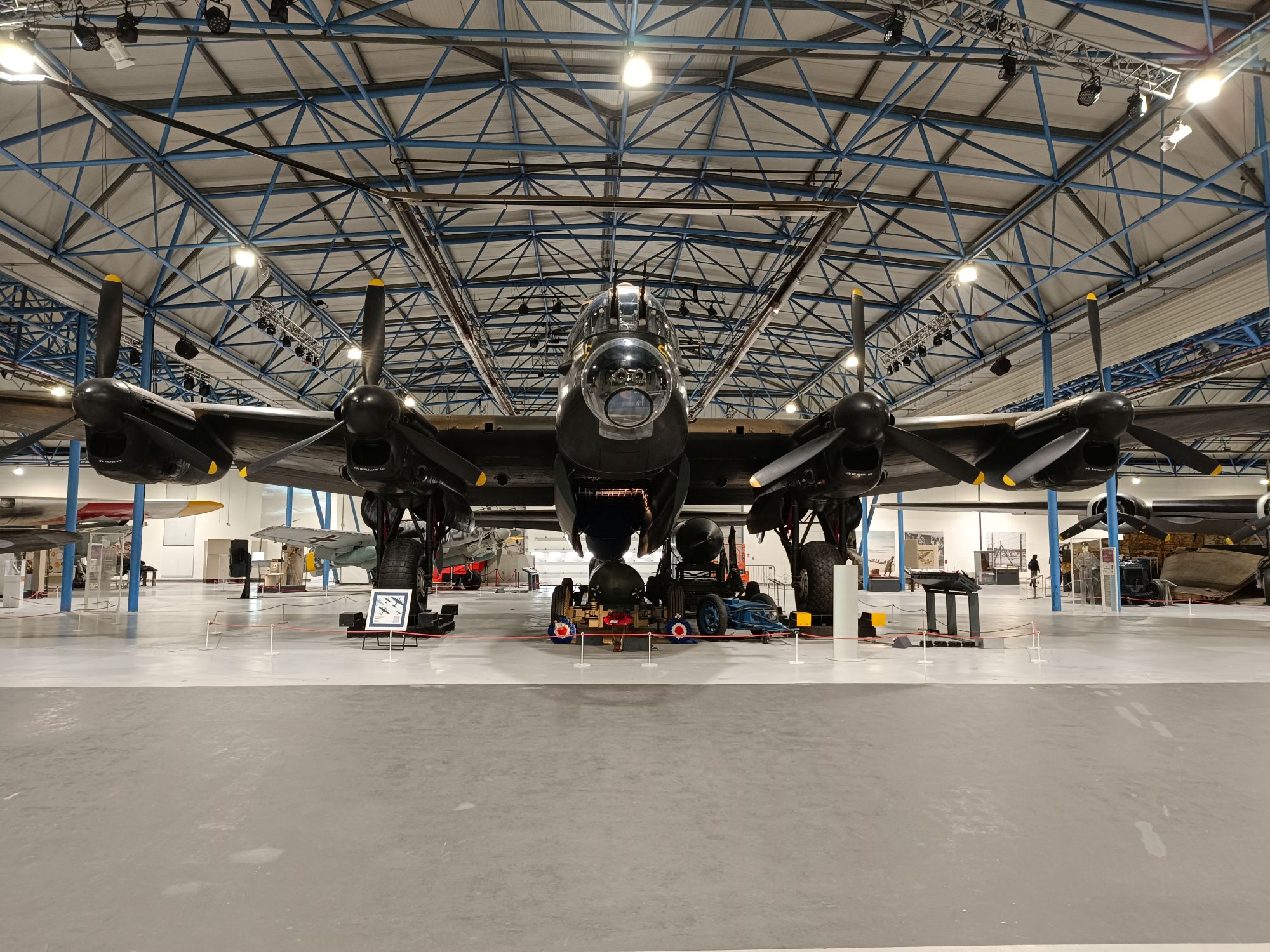
The Avro Lancaster sits in the middle of the exhibition, just after the first hangar. The Lancaster is not as big as modern passenger planes, but big enough that to take up the space among the other aircraft of the time. The exhibit explains how the seven-man crew actually operated the thing, which helped me appreciate just how cramped and exposed they were up there.
The Lancaster entered service in 1942. By the end of the war, crews had flown over 156,000 sorties. It was the aircraft the RAF used for Operation Chastise in May 1943 — the Dambusters raid — where modified Lancasters dropped bouncing bombs to blow up the Mohne and Eder dams in Germany’s Ruhr Valley.It also carried the Grand Slam, a 22,000 lb earthquake bomb. No other Allied aircraft could lift one. They used it on hardened targets like U-boat pens that conventional bombs couldn’t touch. The crews flew mostly at night. You can see why.
De Havilland Mosquito
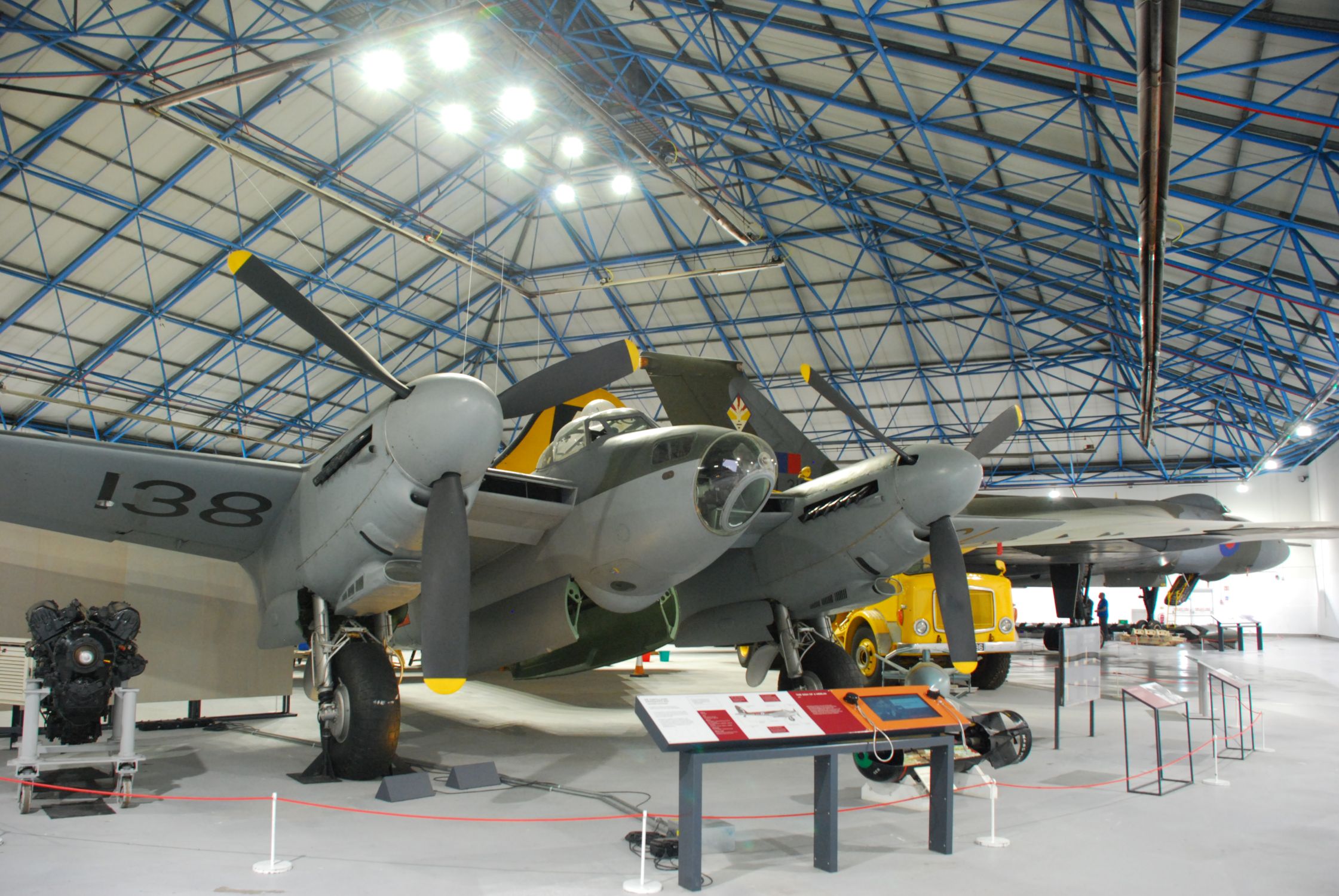
The Mosquito is the one that surprises people. It was built almost entirely from wood. It was because aluminium was scarce during the war and de Havilland went with what was available. Balsa and birch plywood, layered together.
It worked brilliantly. Two Rolls-Royce Merlin engines gave it enough speed to simply outrun enemy fighters. No gun turrets needed. Crews used to say it felt like flying two Spitfire engines bolted to a bomber. The Luftwaffe had a hard time catching it, which was rather the point.
I always find this the story of how the Mosquito came about very interesting. Shows the ingenuity of people back then in the face of adversity and scarcity.
German Planes of WWII
The museum also has German aircraft on display, which I think is the right call. You can’t really understand the Battle of Britain without seeing what the RAF was up against.
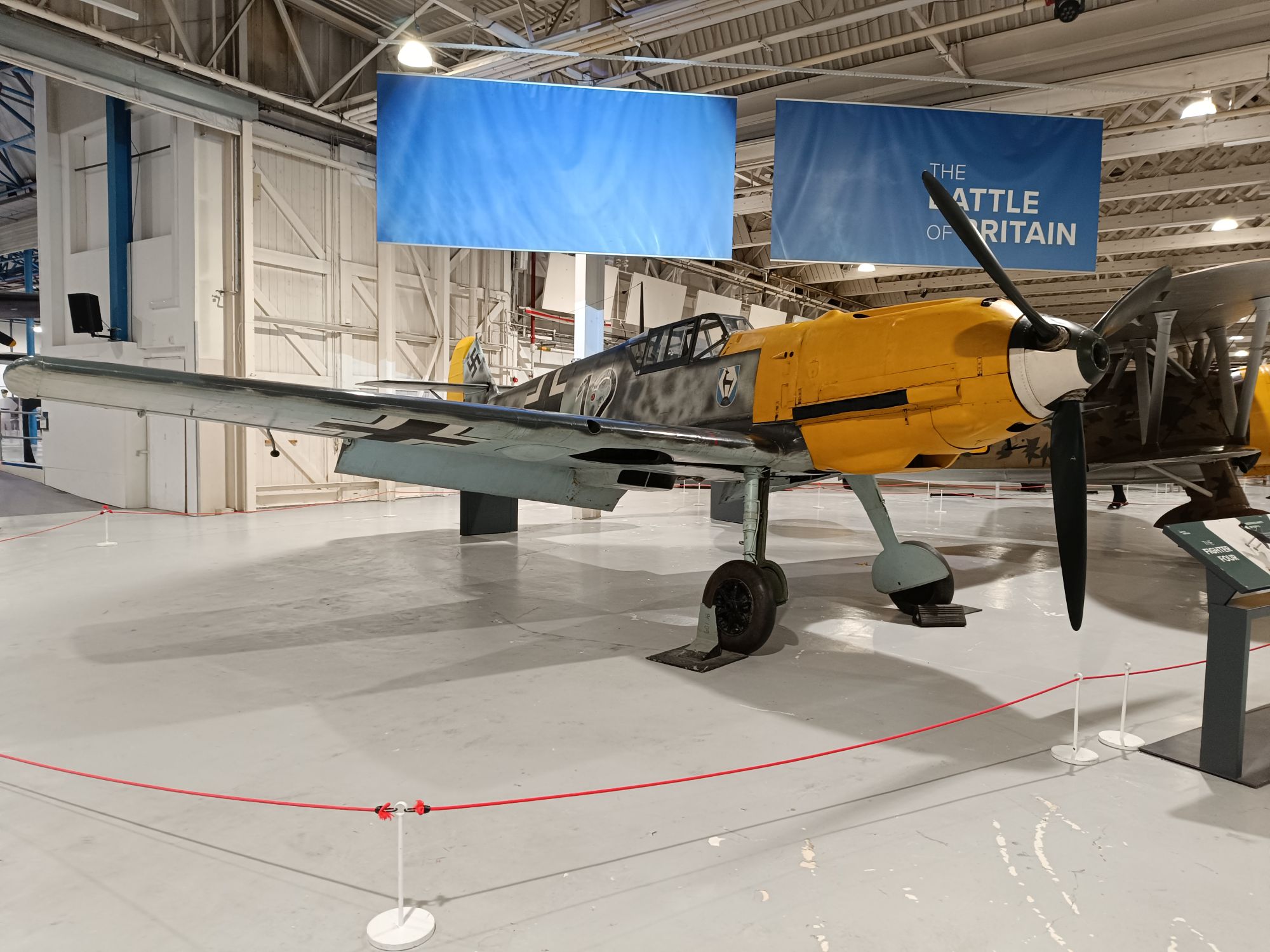
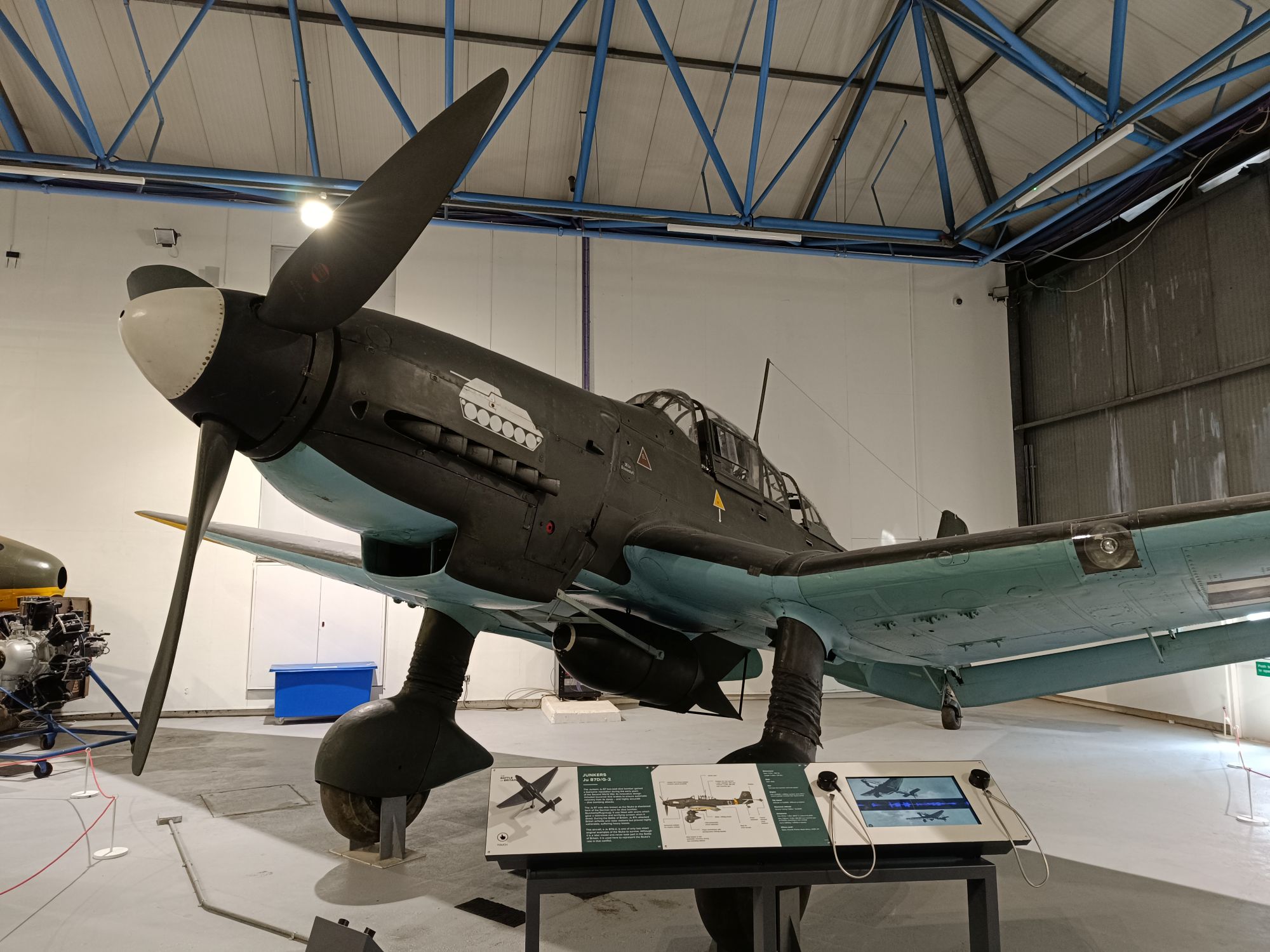
The Messerschmitt Bf 109 was Germany’s main fighter. It dominated over Poland and France before going up against Spitfires and Hurricanes in 1940. The Junkers Ju 87 Stuka is harder to look at. Those gull wings and the Jericho trumpet sirens fitted to the undercarriage, the whole point was to terrify people on the ground before the bombs even landed.
During the Blitz, the Bf 109 escorted bombers while the Stuka hit ports and airfields. Seeing both of them up close, preserved and quiet in a museum, is a unique experience
This museum is impressive for airplane geeks like my son, and also for world war II geeks like me.
Getting there
Take the District Line to Collindale station and then it’s a 14 mins walk to the museum. The 303 bus plies the route between Collindale station and the Museum if you don’t want to walk.
Get more insights in our London itinerary