V&A Museum
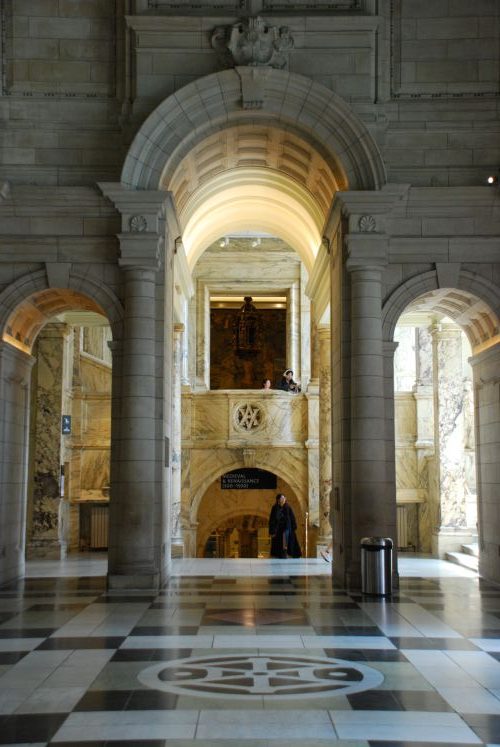
We came to V&A Museum in our trip to London 15 years ago when I was attending class for my MSc. This trip, therefore, would be a nostalgic journey for me and the wife. The kids unfortunately get dragged along, though we do hope they learned something from it. Best of all, the museum is free to enter. In short, this museum has collections related to art, design and performance.
To understand the museum, it helps to know its origins. The V&A (Victoria and Albert) museum was born from the profits of the 1851 Great Exhibition. Driven by Prince Albert’s vision to educate Britain through art and design, and named in honour of him and Queen Victoria when she laid the foundation stone in 1899.
Here are some items in the V&A Museum that I found interesting.
Altarpiece of Saint George
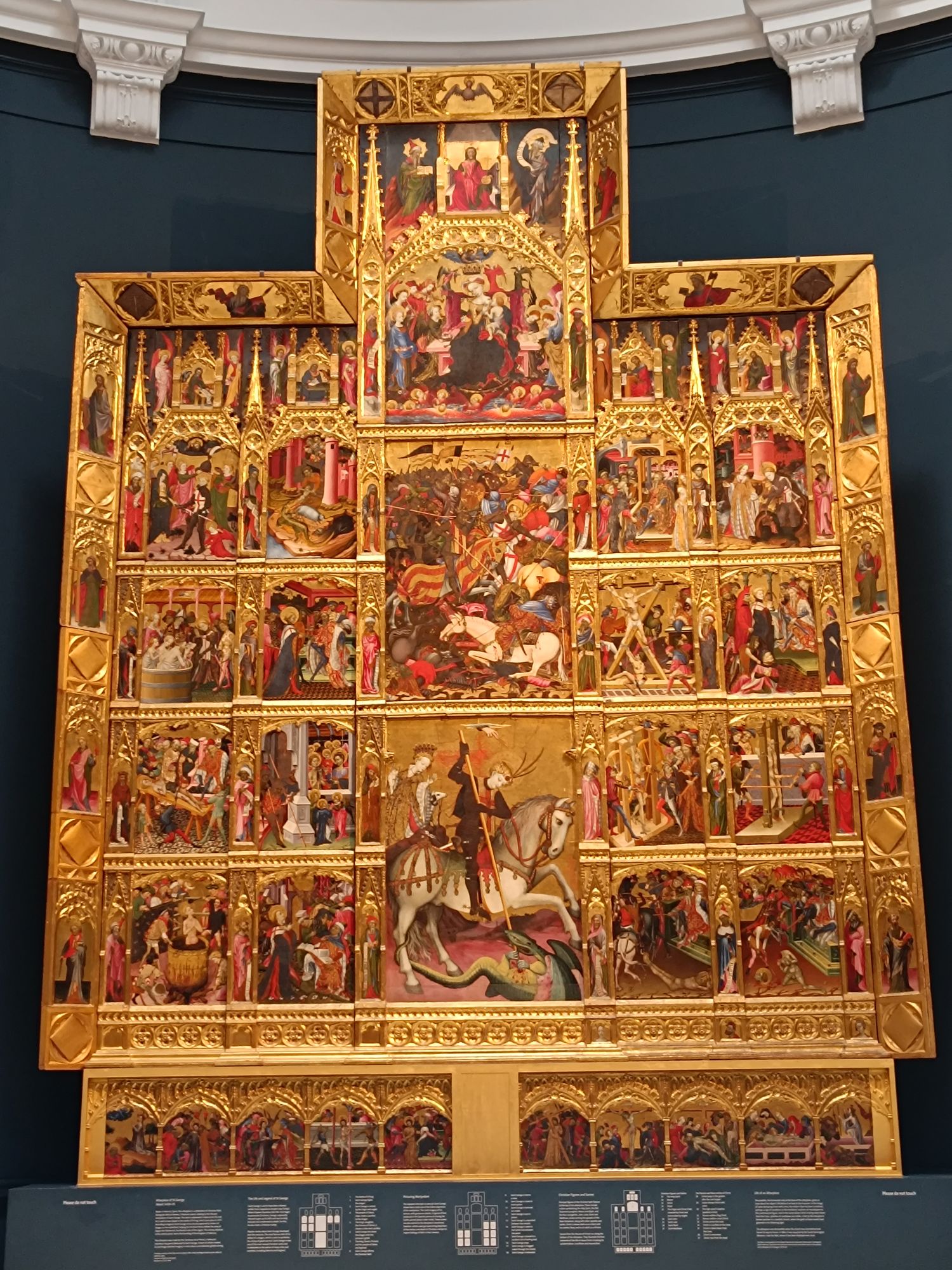
It’s very hard to miss this huge item in the room with Raphael’s Cartoons. This is the Altarpiece of Saint George (Retaule de Sant Jordi). It is a late medieval Spanish altarpiece from Valencia dating to around 1410–1420. The altarpiece was painted by the Valencian artist Marçal de Sax, possibly with a collaborator.
At the centre, Saint George on horseback slays the dragon, dominating the lower central panel. Above that, the scenes grow increasingly celestial, battles and martyrdom give way to the Coronation of the Virgin and Christ in Glory at the very top. Meanwhile, the gold leaf framework, with its pointed Gothic arches and elaborate gilded borders, is classic International Gothic style. This was designed to evoke the heavenly realm rather than the earthly one.
What makes it truly remarkable, however, is how much story it tells. The smaller panels running around the edges narrate the life and martyrdom of Saint George in sequence. It almost like a medieval comic strip. As a result, there are dozens of figures crammed into each scene, and every panel rewards a closer look.
When you look closer at the panel with the apostle Judas, there’s scratches on the panel. This may indicate the deep feelings of worshippers towards Judas.
Unknown Staircase
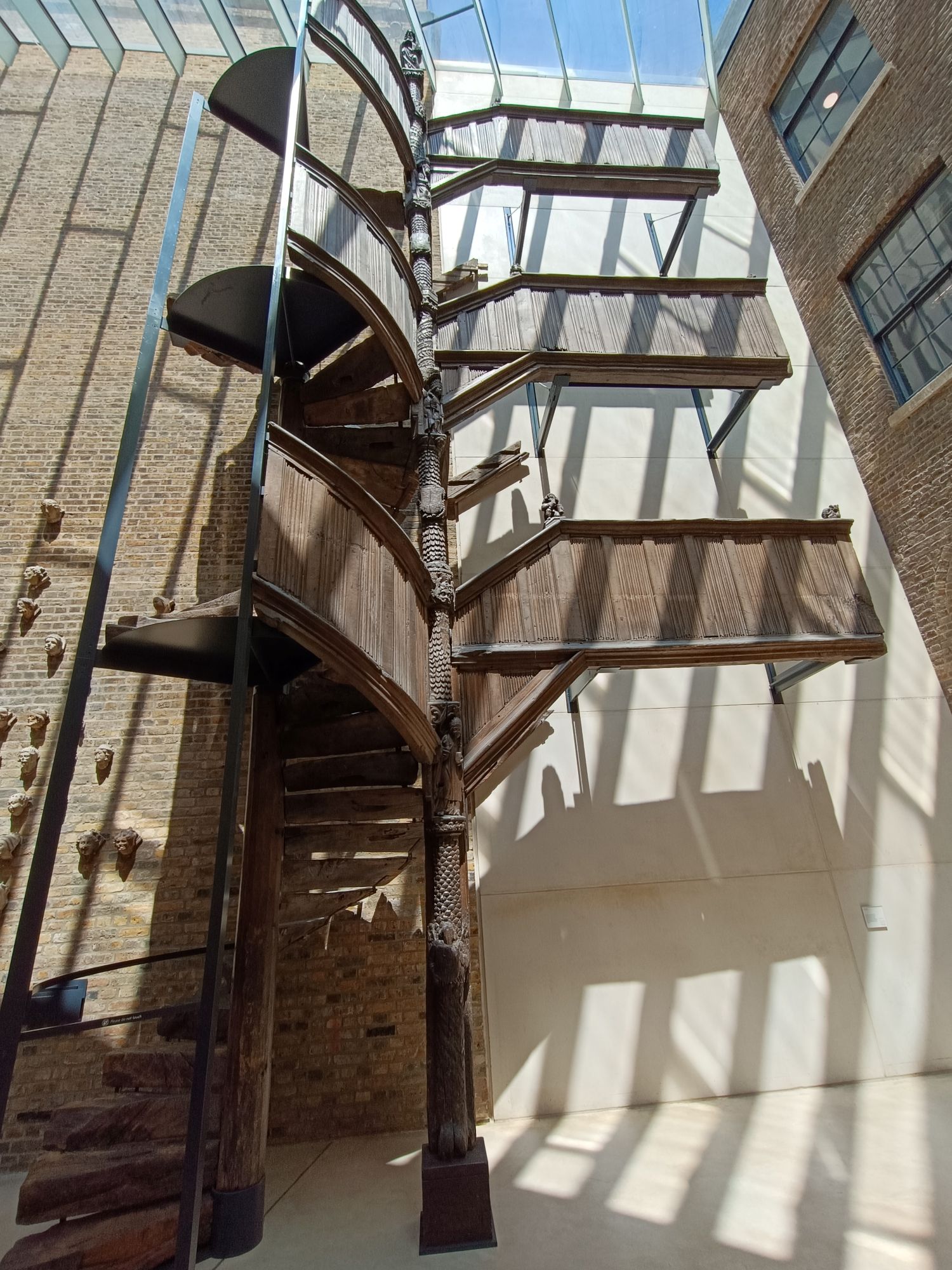
I often wonder how some of the items in the museum come about. For example, this spiral staircase in the Medieval & Renaissance, Room 64b, The Simon Sainsbury Gallery caught me completely off guard.
According to a book near the stairs, it was once part of a building in Morlaix, France. Authorities deemed the stairs unsafe and removed them from the house. Somehow, it ended up in the V&A museum. I spotted it as we were walking towards the cafe for lunch. I hadn’t seen many spiral staircases made of wood, and this one looked heavily used. Interestingly, there was a couple taking their wedding photos in this area when we were there.
Cast Courts
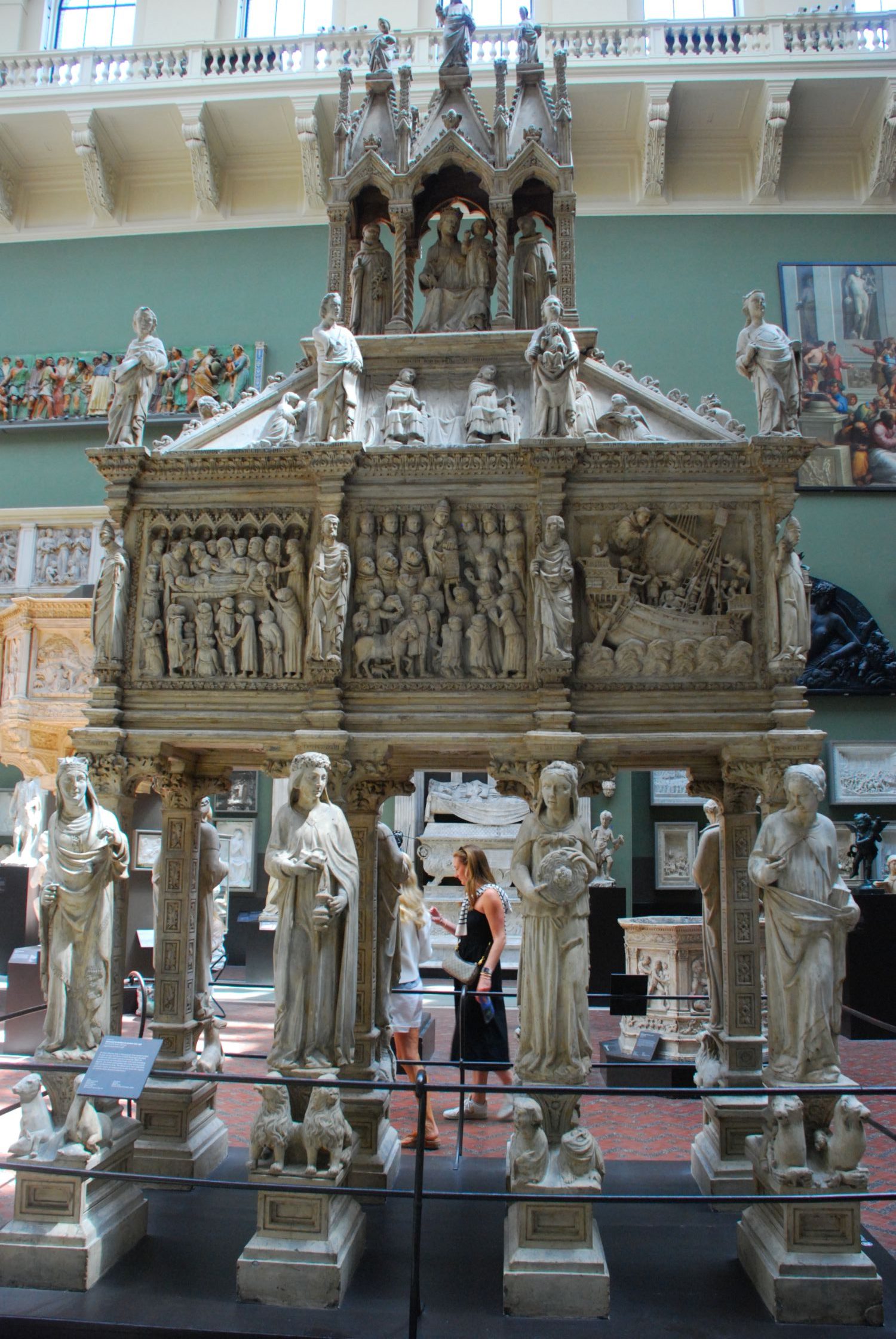
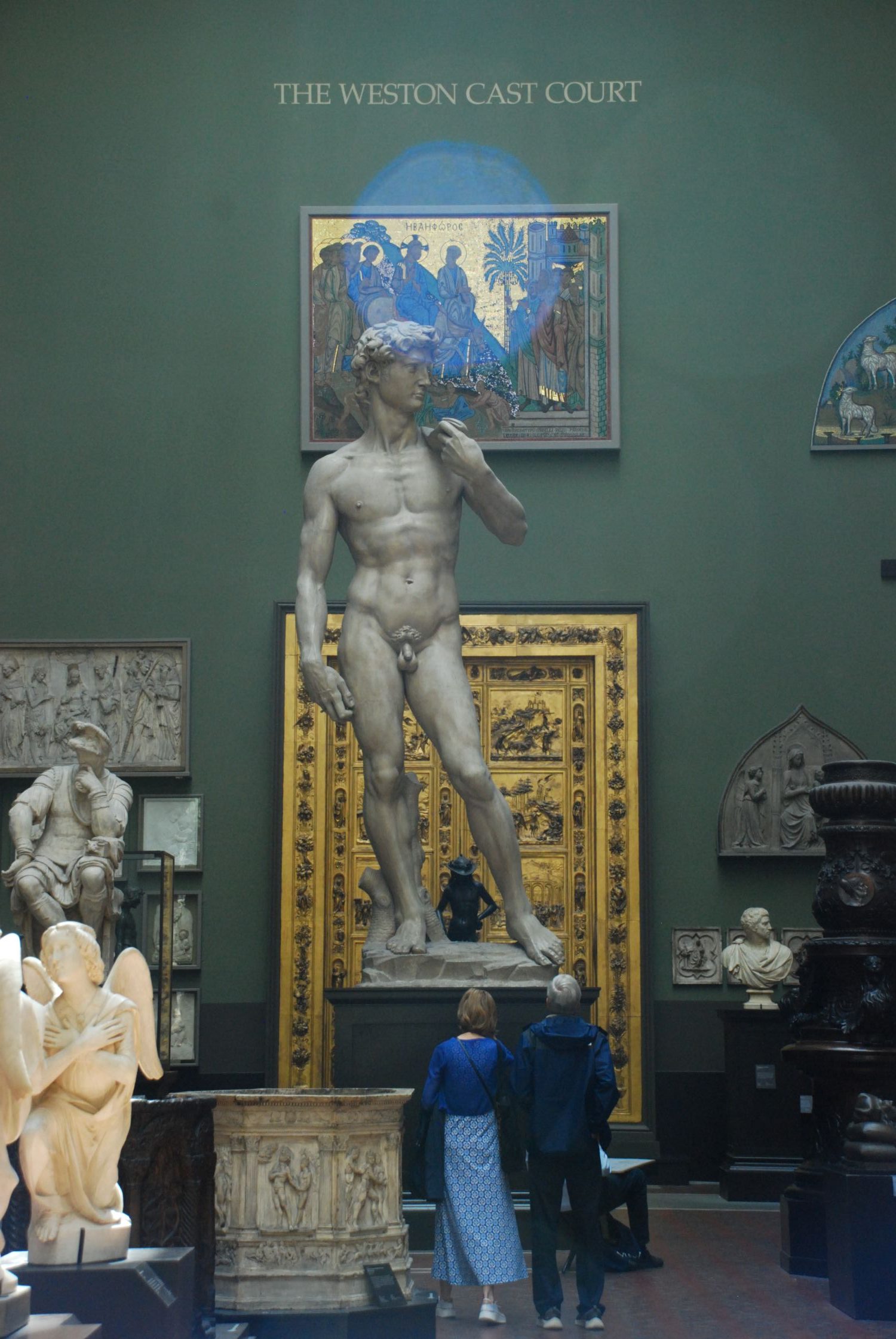
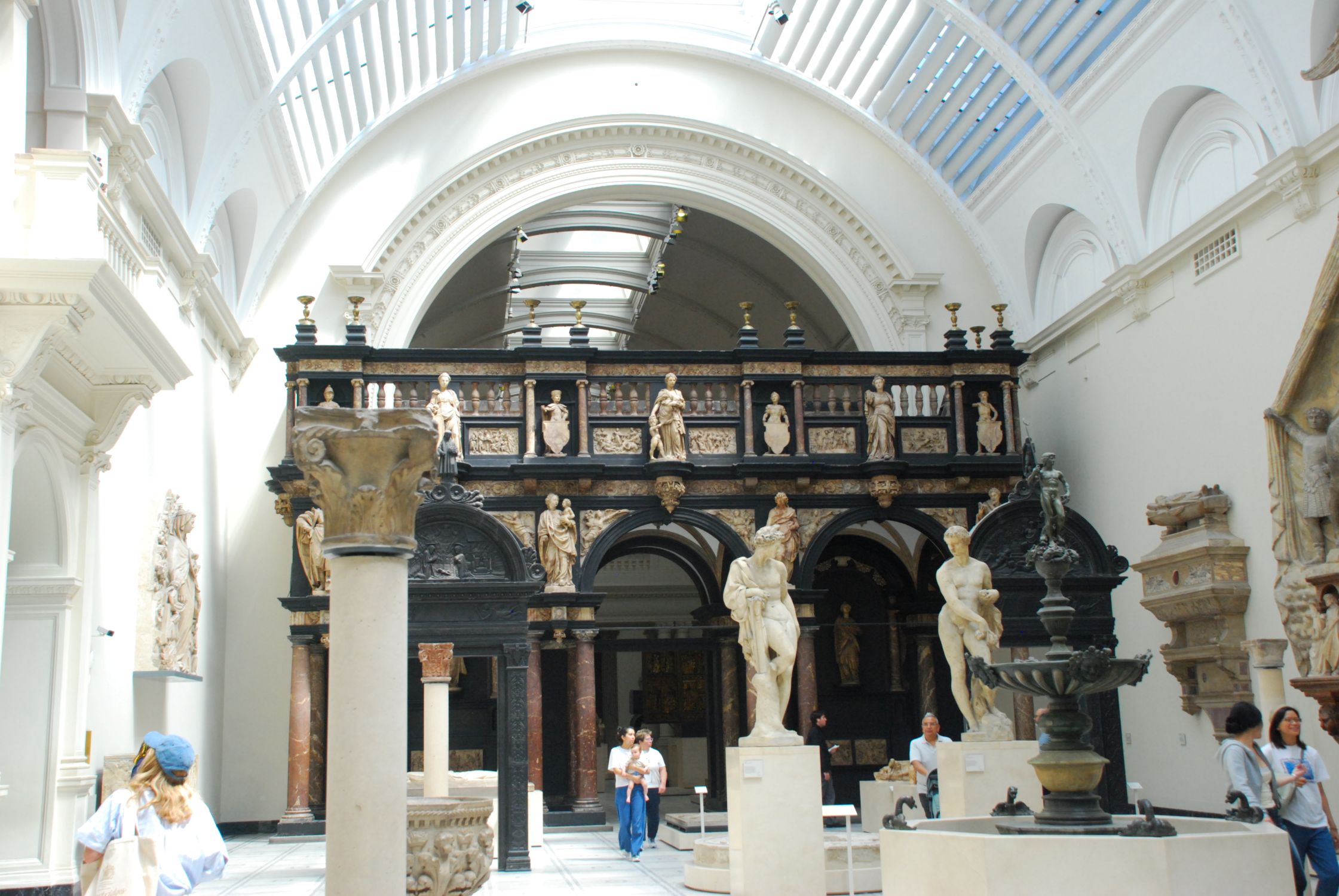
The Cast Courts are one of the most jaw-dropping spaces in the V&A. The idea dates to the 1860s, when European museums signed an agreement to exchange plaster casts of the world’s greatest sculptures and architectural monuments, making them accessible to people who could never travel to see the originals. As a result, the V&A built two enormous Victorian iron and glass halls specifically to house them, and the scale of what’s inside is hard to prepare for.
For instance, the centrepiece is a full-size cast of Trajan’s Column from Rome, so tall they had to cut it in half and stack it across two floors. In addition, there’s a complete cast of Michelangelo’s David, with a fig leaf famously added for Queen Victoria’s visit. We second-guessed ourselves when we saw David because we know the original is in Florence. Beyond those headline pieces, the rooms are packed with portal doorways from Spanish cathedrals, Italian Renaissance tombs, and medieval church facades. Furthermore, some casts are now more historically valuable than the originals, which have since been damaged or destroyed, making the V&A’s versions the best surviving record of what they once looked like.
Getting There
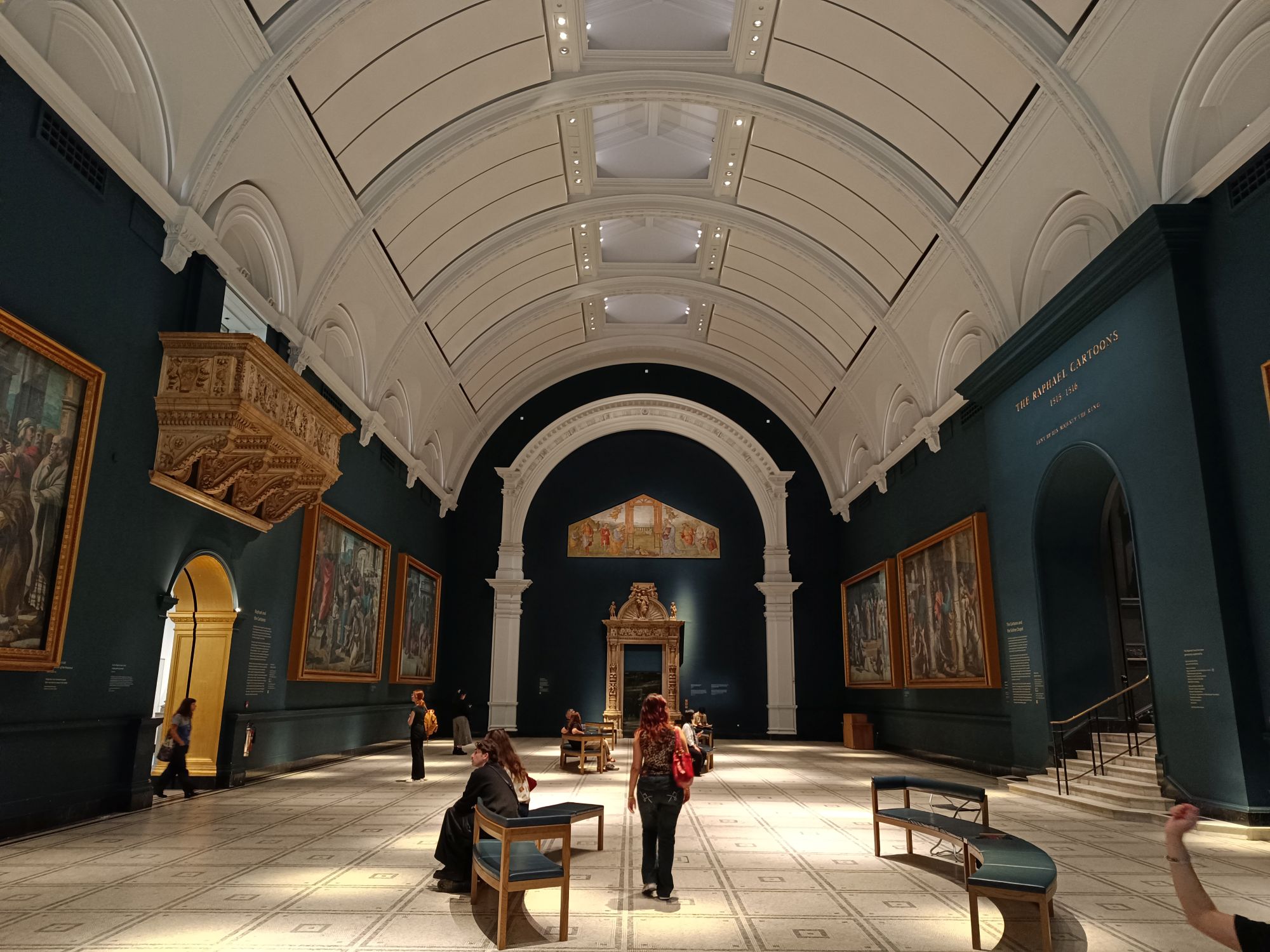
To get there, take the District underground line to South Kensington station. Once inside, follow the signs that point you to the museum. This area has many other museums nearby, so be alert — there’s a small entrance to the V&A from the tunnel inside the station. Not only is this entrance much quieter with fewer people using it, but it also saves you from having to get to street level, making it the closest and most convenient way in from the tube.
Find out more of our trip this time in our London itinerary